
Proximity detection for draglines Sees the person. Slows the dragline.
A proximity awareness system for heavy mining equipment. It picks up people and vehicles at 50 metres and slows the slew in proportion as they close. It watches the trailing cable too, and stops the dragline before a shoe reaches it. Each stop is a controlled one and not an emergency.
 WinnerPirtek Safety Initiative Award
World firstThe first proximity system
integrated with a dragline’s drives
and detecting cable strike
Person detected on left hand side at 50.0 m
Tracked, no intervention
Plan view, standard settings. Every threshold and action is configurable.
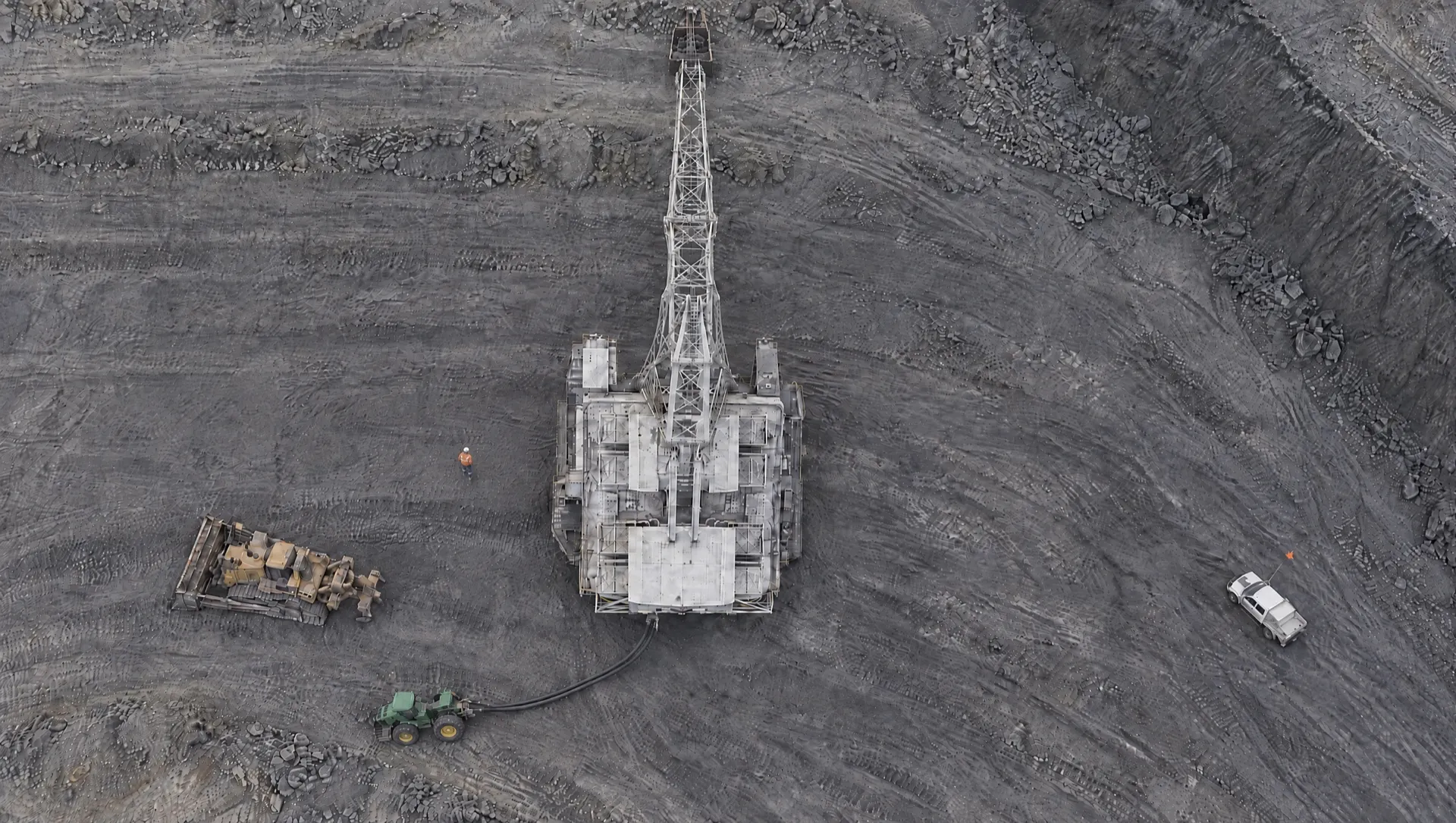
The operator sees ahead and to the right. The machine swings through 360.
People, dozers, cable tractors, light vehicles and the trailing cable are all inside a dragline’s reach. Behind the machine and on its left, the operator can’t see them.
Procedures depend on someone noticing.
Exclusion zones, radio call-ups and spotters all end with a person seeing the hazard in time.
Tags only protect the people wearing them.
A wearable that’s forgotten or taken off protects nobody.
Alarms warn. They don’t act.
A beep in the cab still leaves the reaction to the operator, and a system that raises false alarms soon stops being trusted.
It senses, decides and acts on the machine itself.
No wearables, no outbound network and no change to the OEM controls. Every decision is made on the dragline.
-
01
Sense
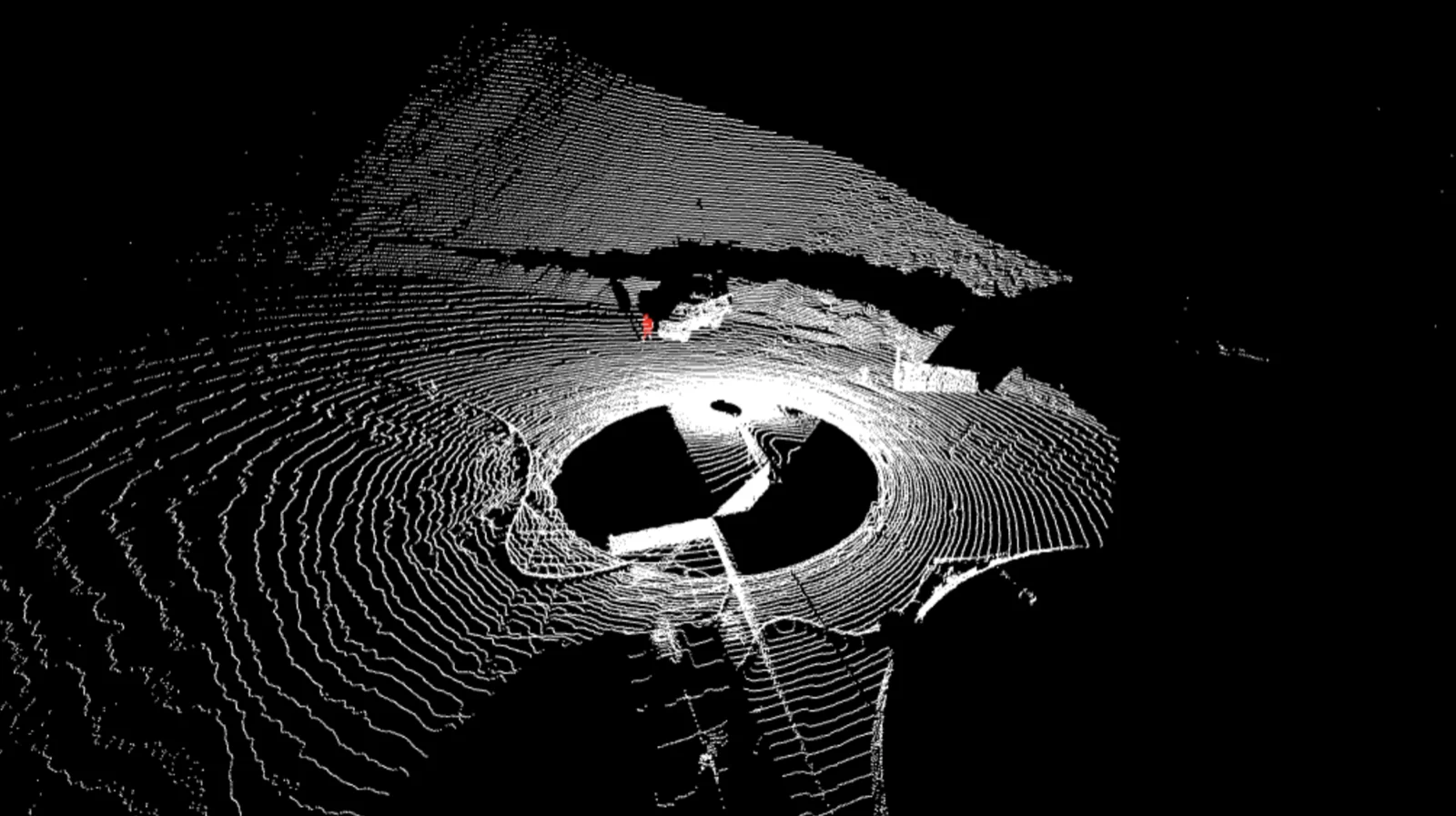
LiDAR covers every side from the machine itself out past 50 metres, and cameras from 5 to 50, through dust, rain and darkness.
-
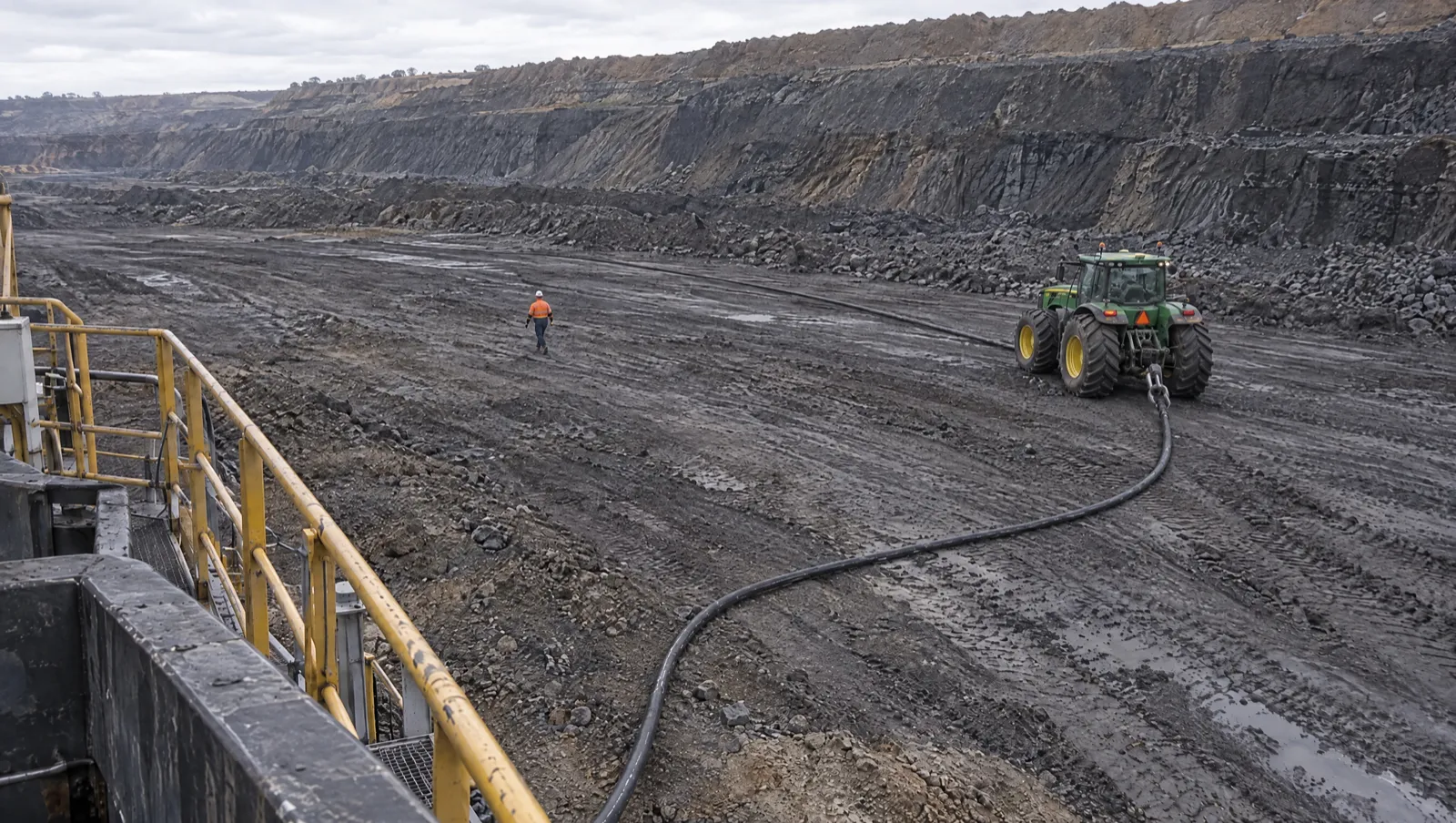
- Classified object
- Recent path
- Trailing cable
02
Understand
LiDAR and optical together say what each return is: a person, a light vehicle, a dozer, a cable tractor or the trailing cable. Every detection is validated before anything reaches the drive.
-
03
Act
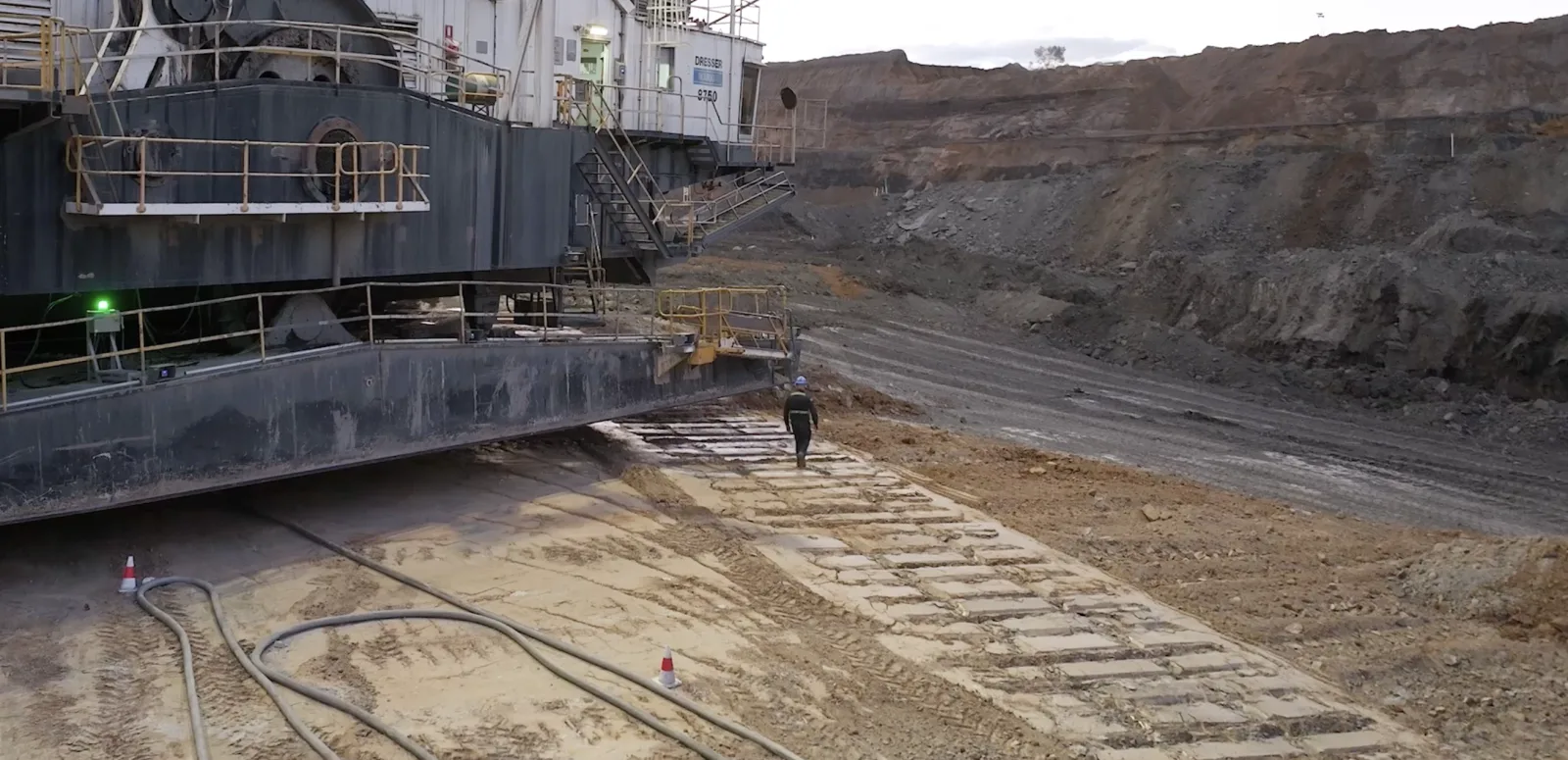
It acts through the dragline’s own drive.
PAS writes a speed reference to the existing drive, so the response is the machine’s own. OEM braking and controls are untouched.
- Brings the dragline to a controlled stop when a shoe is about to reach the trailing cable
- Slows the slew in proportion as someone closes
- Brings it to a controlled stop inside the stop distance
- Falls back to a mechanical emergency stop if that fails
- Holds the restart while anyone is on foot nearby, where configured
It slows before it stops.
Every part of the response is set per site and per machine. Try your own rules: our standard settings are loaded to start.
Illustrative. Your rules are set with our engineers at commissioning, per machine and per machine state.
Your rules for peopleAvailable slew speed as they close
Tracked, no intervention
- 50 to 15 mDetect and trackSlew at 100%
- 15 m to 5 mSlow in proportionDown to 30%, exponential
- Inside 5 mControlled stopMechanical e‑stop if that fails
The operator sees what the system sees, and what it did.
The same detections that reach the drive are on the screen in the cab, with the action taken and the health of every sensor feeding them.
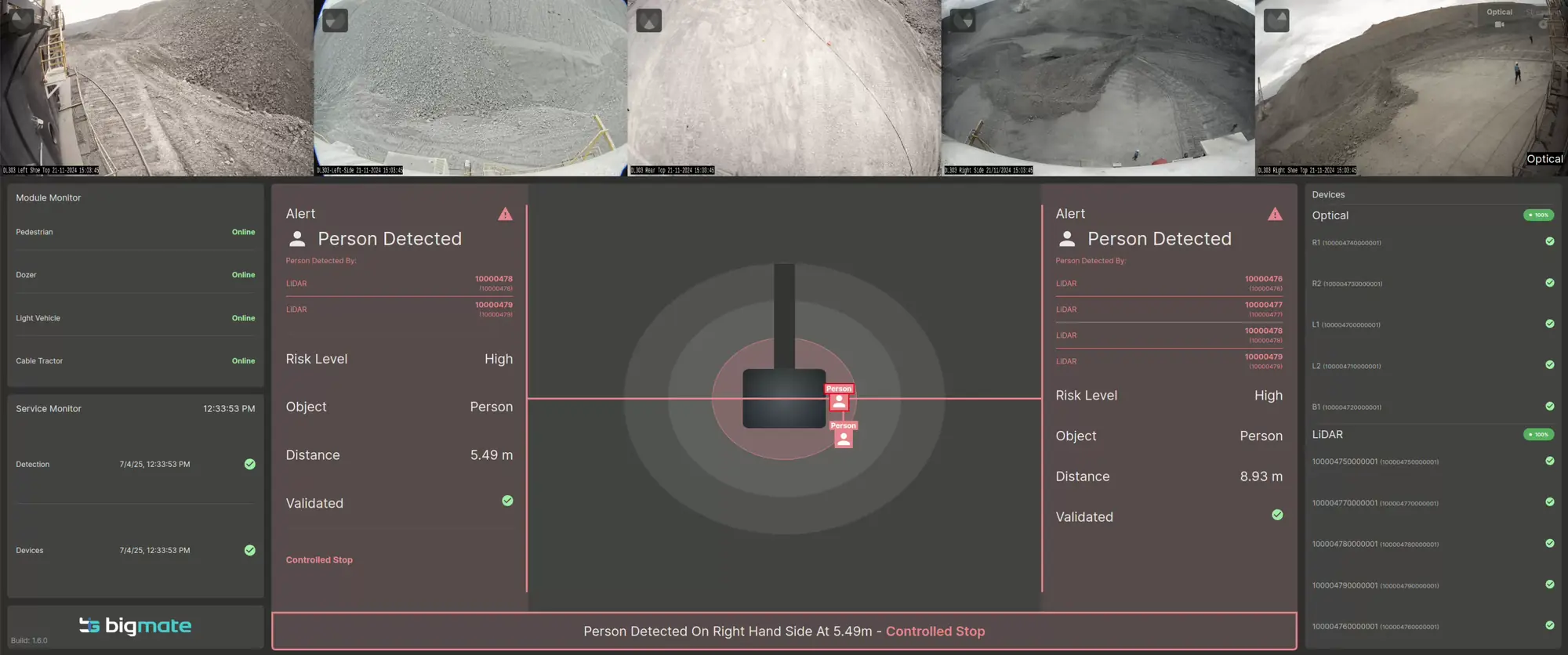
1Five live camera views
Fixed cameras around the machine show the ground the system is reporting on.
2The alert, in full
Object, distance, risk, validation and the action taken, with every contributing sensor named.
3The zones, in plan
Each tracked object placed on the zones around the machine.
4It reports on itself
Every camera and LiDAR unit online, so a dropout shows rather than going unnoticed.
An engineering control, not another procedure.
PAS moves dragline safety up the hierarchy of control: from rules people have to follow, to a machine that acts on its own.
It acts, not just alerts
The machine slows or stops itself, so safety doesn’t depend on anyone reacting in time.
The dragline keeps working
Outside the stop distance it only slows the slew, so production carries on while people stay clear.
Nothing for the crew to wear
No tag to carry or forget. Protection comes from the machine, not the person.
No change to the OEM controls
It writes a speed reference to the existing drive. OEM braking and control architecture are untouched.
Proven in production
99.99986%
Correct responses in live operation
Across 2,689,870 minutes of analytics, and counting.
- World first
- The first proximity system integrated with a dragline’s drives and detecting cable strike
- In service
- On live draglines since 2022
- Recognised
- Pirtek Safety Initiative Award, Queensland Mining Awards 2024
What is dragline proximity detection?
A system that finds people and vehicles near a dragline and responds before the machine can reach them. A dragline operator sees ahead and to the right, but the machine swings through 360 degrees, so the ground behind it and on its left is out of sight. Proximity detection watches that ground for them.
What is PAS?
PAS, the Proximity Awareness System, is Bigmate’s proximity detection and intervention system for heavy mining equipment. It finds and classifies people and vehicles with LiDAR and cameras, and acts through the machine’s own drive: it slows the machine as someone closes and brings it to a controlled stop. It is in service on draglines, and was the first proximity system integrated with a dragline’s drives and detecting cable strike.
Does PAS only work on draglines?
No. PAS is in service on draglines, which is why this page shows one, but the same system does the same job on other heavy machinery: MMUs, haul trucks, excavators and other mobile plant. The sensors are placed to suit each machine, and the detection, tracking and response work the same way. PAS has already been trialled on excavators, and Bigmate’s MMU Personnel & Vehicle Detection System is built on the same perception.
Which draglines can PAS be fitted to?
Any electric walking dragline. PAS works through the dragline’s existing drive rather than replacing it, so it isn’t tied to one make or model, and the sensors are placed to suit each machine.
How does PAS detect people and vehicles?
LiDAR covers every side of the machine, from the machine itself out past 50 metres, and cameras cover 5 to 50 metres, through dust, rain and darkness. Deep learning models on a computer on the machine classify each return as a person, a light vehicle, a dozer, a cable tractor or the trailing cable. On a dragline, several LiDAR units and five cameras are placed around the house so their coverage overlaps.
How does PAS tell a real hazard from a false alarm?
Each detection is tracked from scan to scan, and has to be classified and confirmed over several scans before it can reach the drive. One sensor can confirm a detection; when more sensors agree, it is confirmed faster. Tracking also means a person who drops out of one sensor’s view for a moment isn’t lost, and one person isn’t counted twice.
How does PAS know where people are as the machine swings?
An inertial sensor on the machine measures its heading as it swings, so every detection is placed relative to the machine as it rotates. Distance is measured from the edge of the machine, not from a point at its centre, so the zones follow the machine’s real footprint.
Does PAS stop the dragline, or only warn the operator?
It acts. With the standard settings for people, PAS tracks a person from 50 metres, slows the slew in proportion from 15 metres and brings the machine to a controlled stop inside 5 metres. The stop is a Category 1 controlled stop: the drive brings the machine to rest under control before power is removed. If the controlled stop fails, a mechanical emergency stop follows.
Does PAS detect the trailing cable and prevent cable strikes?
Yes. The trailing cable that powers the dragline runs out of the rear of the machine, behind the operator, where they can’t see it. PAS classifies the trailing cable alongside people and vehicles, and brings the dragline to a controlled stop when a shoe is about to reach it. PAS was the first proximity system integrated with a dragline’s drives and detecting cable strike.
Is PAS a collision avoidance system, and at which EMESRT levels?
Yes. By Bigmate’s own assessment, PAS covers levels 7, 8 and 9 of the EMESRT (Earth Moving Equipment Safety Round Table) vehicle interaction controls: operator awareness through the cab screen (level 7), advisory alerts to the operator (level 8), and intervention (level 9), where PAS slows and stops the machine through its own drive.
Can the distances and actions be set for our site?
Yes. Every part of the response is set with Bigmate’s engineers at commissioning, per site and per machine: the distance bands, the action each band triggers and the shape of the slowdown, from a fixed reduction to a linear or exponential curve. People and vehicles have separate rules, and the rules can change with what the machine is doing, such as digging or walking.
Does PAS change the dragline’s OEM controls?
No. PAS writes a speed reference to the existing drive through the machine’s safety PLC, over CIP Safety on EtherNet/IP, so the response is the machine’s own. OEM braking and control architecture are untouched.
How long does PAS take to install, and does it need downtime?
PAS is installed during a planned shutdown, so fitting it costs no extra production time. The sensor positions and the connection to the drive are planned for each machine beforehand, and the response is set with Bigmate’s engineers at commissioning.
What happens if a sensor or PAS itself has a fault?
Every camera and LiDAR unit reports its health continuously, and the cab screen shows any unit that drops out, so a gap in coverage is visible rather than silent. PAS also sends the machine’s safety PLC a health signal and a heartbeat, so a fault in PAS is seen by the machine’s own safety system.
How reliable is PAS in live operation?
In live operation, 99.99986% of 2,689,870 analysed minutes had no missed, late or wrong intervention from PAS, and the count keeps growing as PAS runs.
Does PAS need a network or cloud connection?
No. Detection, tracking and the signal to the machine all run on a computer on the machine itself, so protection doesn’t depend on a site network or an internet link. Event recordings upload when a connection is available.
Does PAS record what happened?
Yes. Each event is saved with a recording of the cab screen from before and after it, camera images, the LiDAR data and the machine’s state at the time, so every intervention can be reviewed afterwards.
What does the operator see in the cab?
The same detections that reach the drive: five live camera views, each alert in full with the object, distance, risk, validation and action taken, the tracked objects placed on the zones in plan, and the health of every camera and LiDAR unit.
Do people on the ground need to wear a tag?
No. PAS detects people with sensors on the machine, so there is no tag to carry or forget. Protection comes from the machine, not the person.
Has PAS won any awards?
Yes. PAS won the Pirtek Safety Initiative Award at the 2024 Queensland Mining Awards.
Don’t just detect the risk. Intervene.
Book a demo with our engineers to see PAS working on a dragline, and what fitting it to yours would involve.